Solar Power
Solar Off-grid
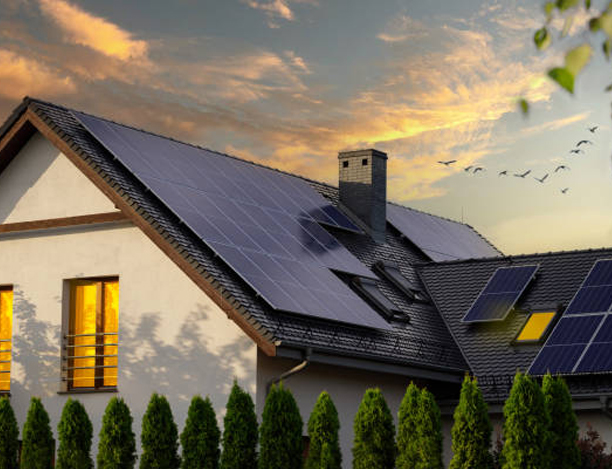
Living in South Africa comes with a big benefit: we get a lot of sun! Using the sun to generate electricity through solar power is good for the environment and your electricity bill. It may, however, take time before you begin to see the returns of your investment. And you may not have the money available right now. That’s where credit comes in. When used for the right reasons, credit facilities can help you achieve your goal of living off the grid and save money in the long run. We work closely with credit institutions which could possibly assist you in going off-grid.
You need a clear plan to make sure this home investment is done right first time.
If you’re planning to get your house off the grid by installing a solar-power system, then it helps to have a plan. Not only will this project be a substantial investment in your home, but it’s also critical infrastructure that you and your family will rely on for years to come. It’s important to make sure you do it right.
Below is a step-by-step guide to finding the right solar system for your home with the least fuss.
Choosing the type of solar installation that’s going to work best in your home starts with looking at your needs. This is as much about how much electricity you use, as it is about what you use it for.
It makes sense, for example, to replace energy-hungry appliances like your geyser, and possibly even your stove, with solar or alternative energy options. This way, you can lighten the load that your solar system needs to carry, meaning you can get away with a smaller and more cost-effective system.
The simplest way to understand how much power you use every month is to look at your electricity bill. This will show you how many kWh you use every month, which you can then divide by 30 to get your daily average usage. Armed with this number, you’ll have a good idea of how much electricity your solar system must produce every day to power your home..
It helps to get the experts in early to avoid any miscalculations or potential problems.
Get us in early to help guide you when going solar. This is a one-stop service that helps to evaluate your needs, propose an appropriate solution and manage the installation.
This guidance is helpful in deciding what type of system you want – grid-tied, hybrid or off-grid. The biggest deciding factor could end up being cost, as these 3 options are listed from cheapest to most expensive.
We will be able to tell you how much energy you could produce based on your location, your roof size, and any obstructions like nearby trees or buildings. You can obviously produce more energy by installing more solar panels, but you might be limited by how much space you have available. Also, your choice of inverter could limit how much power – in other words, how many solar panels – it can handle.
At the very least, your system needs to produce enough power to cover your daily energy usage, including enough to fully charge your batteries to power your home at night. As you can imagine, it’s important to size your system correctly.
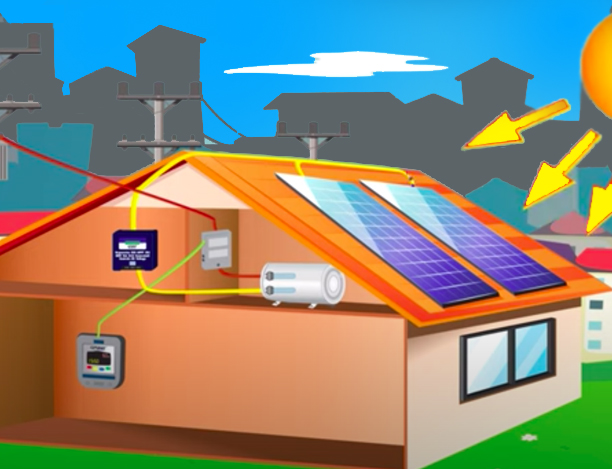
Armed with enough information, you can now make an informed decision on what type of system is best for your home. The components that need to work together to power your home include the solar panels to generate the electricity, the inverter to convert and control the electricity supply, and the batteries to store power for use at night.
We've done extensive research on brands, systems, and components available on the market. Our energy consultant will offer suggestions on what is ideal for your setup. Even though they are the experts, feel free to ask as many questions.
Chances are that you won’t be able to pay for your solar system in cash. A solar conversion can cost tens or even hundreds of thousands of rands – it’s the perfect example of when it makes sense to use credit to improve your life. One of the most cost-effective ways to take on this debt is to explore your solar financing options. Speak to us to explore your options.
Once your financing is sorted out, you can finally go ahead with your installation.
We will manage the entire process for you from calculating what size system you need, to helping to coordinate the installation.
We will inspect your roof to ensure that it is structurally suited to installing the panels and their frames. Some degree of electrical work will also have to be done to integrate the power coming from the inverter and batteries into your home’s supply. This leads us to one of the most important steps in your home solar installation – the electrical certificate of compliance. This document is your guarantee that the work has been done to the necessary standards. It will be required by your local council and your home insurance provider.
The final step is to have your system registered with your local council. This is a legal requirement. It is included in the offering with us.
Geyserwise PV Conversion
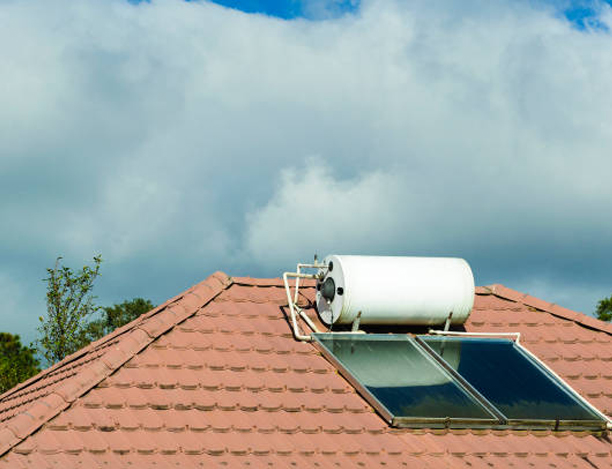
The system makes use of photovoltaic technology and a unique PTC AC/DC element to heat the water in the geyser. This differs from traditional thermal hot water systems where water is cycled from a collector through pipes to the geyser by either making use of a 220V Pump, 12V Pump or natural convection.
- Advantages over thermal hot water systems are as follows
- Any existing geyser can be converted
- No Additional plumbing is required
- No pumps necessary to circulate water
- No risk of damaged panels in frost prone areas
- The water temperature can be controlled on very hot summer days - reduced risk of overheating problems
- Suitable in all water conditions
- Suitable in areas where the geyser is not situated near the panels
- Modular system – can be expanded to build an off-grid power system for the home
Solar Flat Panel Heater
Solar hot water is an affordable, effective form of clean, renewable energy that can be taken advantage of by every homeowner in South Africa. Using solar flat plate collectors, you can take advantage of the sun's abundant energy to lower your own energy costs. This means lower bills every month, free hot water for your home, and more energy independence. Solar flat plate collectors are an affordable solution to rising energy costs. Solar flat plates are long-lasting, durable, and cost-effective. Flat plate collectors are traditionally used in warmer, sunnier climates. For cooler, cloudier areas, and areas that have long, cold winters, we can advise on alternative options.
Installing a solar flat plate water heating system for your home can reduce your energy consumption by as much as 40% to 50%. It only takes 1 or 2 solar flat plates to heat over 300 liters of hot water per day - all for free. Many people don't realize how much energy is used just to provide hot water in your home. In fact, 20% to 25% of the average family's energy consumption is just for heating water for things like laundry, cooking, cleaning, dishes, and showers. Installing a solar flat plate system would mean significantly reducing - or eliminating - these costs. This means less out-of-pocket expense and a faster rate of return on the costs of your solar water heating system.
A solar flat plate water heating system is a very simple and maintenance free way to immediately reduce your monthly energy costs. Both evacuated tube systems and flat plate solar hot water systems work in a similar manner.
(1). In most residential solar hot water systems that use flat plates, cold water (from the street) flows into the bottom of the solar storage tank.
(2). The solar loop’s heat transfer fluid (usually a water & glycol mixture) is pumped up to the flat plate collector.
(3). This fluid passes through the inside of the solar collector, where it is heated with the sun’s energy.
(4). The flat plate collectors are very well insulated, allowing them to trap quite a bit of the sun's heat, while letting very little escape. Now that the fluid has been heated by the sun, it is pumped back down to the solar storage tank, where it then heats the water for your home.
(5).
This is just one of the more common designs used in a home solar hot water system. Other designs are available, and can be used depending on your specific application.
In the average South African home, over 25% of energy consumption comes from heating water. This hot water is often used for cooking, washing dishes, laundry, showers, and cleaning. A solar hot water system is an ideal solution to reduce ever-rising energy costs. Solar flat plate collectors are typically used in warmer, higher-temperature climates. The technology used in solar flat plates allows them to take advantage of warmer outside temperatures to increase their production of hot water. However, in colder climates, or areas where there are long, harsh winters, you may wish to consider our solar-evacuated tube collectors. Applying a solar hot water system can give you a number of benefits.
By using the sun to heat - or preheat - your home's hot water, you can cut your water heating bill substantially. On many solar hot water systems, customers report that their hot water heating bills have been reduced by as much as 80%. Over 30% of the average South African family's electric bill goes directly to heating hot water. This means that a solar water heating system can immediately reduce your bills, and will continue to do so for decades to come.
Solar water heating systems help you reduce energy consumption, and therefore, reduce the pollution associated with producing that energy. A 50% reduction in traditional energy use means a 50% reduction in CO2 emissions. So by installing a solar hot water system in your home, you are reducing your carbon footprint by half. This results in a cleaner environment and helps to lessen our reliance on traditional, polluting fossil fuels like coal and oil. You are able to contribute to a better tomorrow - all while saving money!
With a solar hot water heating system, many times a solar tank is installed to work alongside your existing hot water tank. This means you will have double the storage - and twice as much hot water available. So when you have guests, visitors, or want to take that extra long soak in the tub - you can do so without it jumping up your electric bill. You'll have more water - and hotter water - available. Hot water that you can feel good about using, knowing it was heated using the sun's energy for zero cost.